
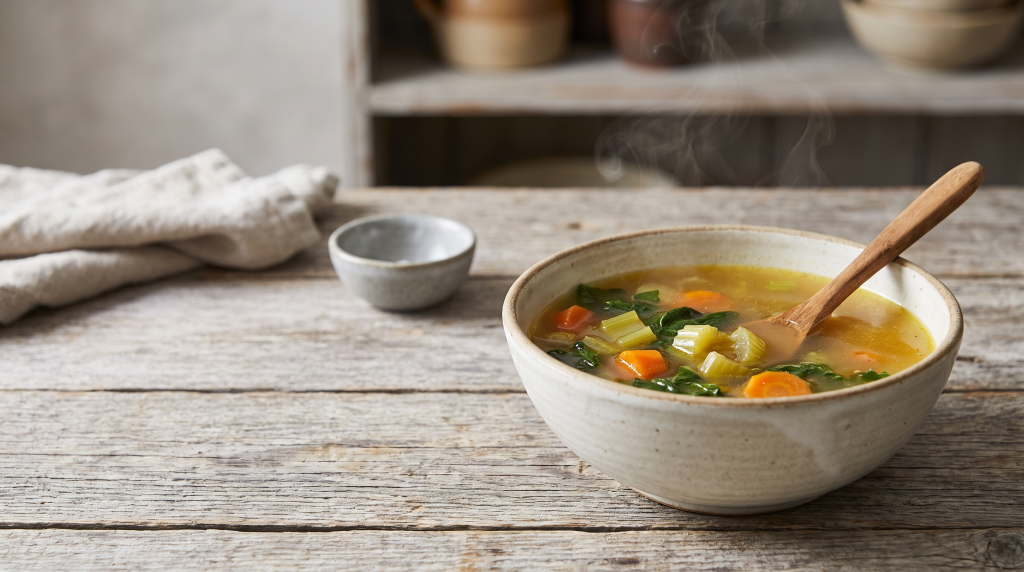
| Quick AnswerBone broth makes a richer, more satisfying soup base than water or thin stock, thanks to its collagen and protein.A simple formula, base plus aromatics plus a vegetable plus a protein plus a fresh finish, turns broth into a meal in minutes.Match the broth to the bowl: bold beef bone broth for hearty soups, mild chicken bone broth for delicate ones.Brothy soups store and freeze well, which makes them ideal for batch cooking. |
A good soup starts with a good base, and that is exactly where bone broth shines. Because it already carries body, flavor, and protein, bone broth lets you build a satisfying bowl with very little else. Whether you keep a carton of liquid broth on hand or simmer your own, these simple ideas turn it into a nourishing meal in minutes.
In this guide I will share a flexible formula, a handful of easy soups, and the small touches that make each bowl taste its best. None of these are fussy. The whole point of cooking with bone broth is that the broth does most of the work for you, so a real, comforting bowl is never far away.
Why Start With Bone Broth?
Compared with water or a thin stock, bone broth gives a soup a richer mouthfeel and a savory depth that makes even a quick bowl feel nourishing. It also adds collagen and a little protein, so a broth based soup tends to be more satisfying and stays with you longer than one built on water alone. That extra body is the difference between a bowl that feels like a snack and one that feels like a meal.
The flavor you start with matters too. A hearty beef bone broth makes a robust, full bodied base that stands up to strong ingredients, while a lighter chicken bone broth keeps things delicate and lets other flavors come through. If you are new to the differences between them, our overview of the types of bone broth is a good place to start, and our guide to what bone broth tastes like covers how each animal comes across in the bowl.
A Simple Formula for Any Bowl
Most easy soups follow the same shape, so once you have it, you can improvise endlessly without a recipe. Start with a base of bone broth, add aromatics, add a vegetable or two, add a protein, and finish with something fresh. That is the whole framework.
- Base: two to three cups of bone broth, gently warmed.
- Aromatics: garlic, onion, ginger, lemongrass, or a spoon of miso.
- Vegetables: whatever you have, chopped small so they cook quickly.
- Protein: shredded chicken, an egg, beans, lentils, or tofu.
- Finish: fresh herbs, a squeeze of citrus, a drizzle of good oil, or a pinch of chili.
Once you internalize this, your fridge becomes a soup kit. A little broth and a few odds and ends become dinner, and no two bowls have to be the same.
Five Easy Bone Broth Soup Ideas
- Egg drop soup. Bring chicken bone broth to a gentle simmer, stir in a beaten egg in a slow stream so it forms delicate ribbons, and finish with scallions and a drop of sesame oil. Ready in five minutes.
- Ginger and greens soup. Simmer broth with sliced ginger and garlic for a few minutes, then wilt in spinach, kale, or bok choy. Light, warming, and a comfort when you feel run down.
- Hearty beef and vegetable. Use a rich beef bone broth as the base, add diced carrots, celery, and potato, and stir in a handful of cooked beef or beans for a filling, old fashioned bowl.
- Miso bone broth. Whisk a spoon of miso into warm broth off the heat to keep it lively, then add cubed tofu, seaweed, and scallions for a quick, savory cup.
- Brothy noodles. Pour hot broth over cooked noodles, top with a soft egg, quick greens, and chili crisp, and you have a fast, deeply comforting bowl with real body.
Choosing the Right Broth for Your Soup
The broth you pick shapes the whole bowl, so it is worth matching it to the dish. For light, brothy, Asian inspired soups, a mild chicken bone broth is ideal, since it stays clean and lets ginger, miso, and herbs lead. For hearty, rustic soups and stews, a deep beef bone broth gives the body and richness those bowls want. A turkey bone broth sits nicely in between for everyday soups, while a delicate fish bone broth suits seafood chowders and lighter bowls. When in doubt, match the strength of the broth to the strength of the dish, and you will rarely go wrong.
Boosting the Protein and Nutrition
If you want a bowl that holds you longer, lean on protein. Stirring in cooked meat, beans, lentils, or an egg is the easy route, and for an extra lift you can whisk in an unflavored bone broth protein or start from a more concentrated broth. The different forms of bone broth, from liquid to powder, all work as a soup base, so you can match the convenience to your week.
Vegetables do their part too, adding fiber, color, and nutrients for very few calories. A handful of greens, some grated carrot, or a scoop of beans turns a simple cup of broth into a balanced bowl. For more on what a serving of broth itself provides, see our bone broth nutrition facts.
Building Flavor in Layers
The secret to a soup that tastes like it simmered all day is to build flavor in layers rather than relying on the broth alone. Start by gently cooking your aromatics so they sweeten, then add the broth and let everything mingle. Season gradually, tasting as you go, and finish with a bright note like lemon or vinegar to lift the whole bowl. A little acid at the end does more than a lot of salt, and a drizzle of good oil or a scatter of fresh herbs makes even a five minute soup feel finished.
Tips for the Best Flavor
- Season at the end, since some broths are already salted. Taste first, then adjust.
- Do not boil hard. A gentle simmer keeps the broth clear and the flavor clean.
- Add a splash of acid, like lemon or vinegar, to brighten a rich bowl.
- Match the broth to the dish: bold beef for hearty soups, mild chicken for delicate ones.
- Keep texture in mind, adding quick cooking greens at the very end so they stay vibrant.
Common Mistakes to Avoid
A few easy missteps can flatten an otherwise good bowl. Over salting early, before the broth has reduced, can leave a finished soup too salty, so hold back and adjust at the end. Boiling the broth hard can turn it cloudy and dull, so keep it at a simmer. Overcooking delicate vegetables or greens leaves them drab, so add them late. And using a thin, watery broth where the dish wants body will leave the soup feeling empty, which is exactly why a real bone broth base makes such a difference.
Make It Ahead and Store It
Brothy soups keep beautifully, which makes them ideal for batch cooking. Store leftovers in the fridge for a few days, or freeze portions for later; our guide to how long bone broth lasts covers the timelines for both. Soups with delicate greens or noodles are best with those elements added fresh at reheating, so freeze the broth base on its own and finish the bowl when you serve it.
Keeping a few cartons of broth and a bag of frozen vegetables on hand means a real bowl of soup is never more than a few minutes away. For more ways to work broth into your routine beyond soup, see our guide to how to use bone broth.
Turning Soup Into a Weekly Habit
The easiest way to eat well during a busy week is to make a real bowl of soup effortless to reach for, and bone broth is what makes that possible. Keep a few cartons of liquid broth or a tub of powder in the cupboard, a bag of mixed frozen vegetables in the freezer, and a protein or two on hand, and you always have the makings of a nourishing bowl. A pot of soup on a Sunday, portioned into containers, can cover several lunches with no further cooking.
Variety is what keeps the habit alive, so rotate your broths and flavors. One week, lean on a light chicken bone broth with ginger and greens; the next, a hearty beef bone broth with vegetables and beans. Switching the aromatics, the protein, and the finishing touches means the same simple formula never feels repetitive. Over time, soup stops being a recipe you follow and becomes something you improvise, which is exactly when it becomes a habit you keep. For more inspiration, browse how to use bone broth.
Frequently Asked Questions
Can I use store-bought bone broth for soup?
Absolutely. A quality store bought bone broth is a great shortcut and works just like homemade. Check the label for good sourcing and reasonable sodium so you can season the soup to taste.
Which bone broth is best for soup?
It depends on the bowl. A rich beef bone broth suits hearty soups, while a lighter chicken bone broth is better for delicate ones. Both make an excellent base, so keep whichever you enjoy most on hand.
How do I make a bone broth soup more filling?
Add protein and a little fat. Stir in cooked meat, beans, or an egg, start from a more concentrated broth, or whisk in an unflavored bone broth protein for extra staying power.
Can I freeze bone broth soup?
Yes, most brothy soups freeze well in portions. Soups with delicate greens or noodles are best with those added fresh when you reheat, so freeze the broth base on its own.
Do I need to add salt to bone broth soup?
Often a little, but taste first. Some broths are already salted, so season gradually at the end, and brighten the bowl with a squeeze of lemon rather than reaching only for more salt.
