
Quick Answer
- A bone broth cleanse is a short reset, often one to three days, that centers meals around broth and gentle whole foods.
- It is best understood as a simplicity and habit reset, not a literal detox; your liver and kidneys handle detoxification.
- It may support hydration and a fresh start, but it is not suitable for everyone, and results vary.
- Skip it if you are pregnant, breastfeeding, managing a medical condition, or have a history of disordered eating, and check with a professional first.
A bone broth cleanse is one of the more popular ways people use bone broth, and also one of the most misunderstood. Here I will explain what it actually involves, set realistic expectations about what it can and cannot do, and, most importantly, cover who should approach it with caution. This is an area where responsible, honest framing matters more than hype.
Before anything else: a cleanse is not the right choice for everyone, and it is never a substitute for medical care. If you have any health condition or concern, please speak with a qualified professional before trying one.
What People Mean by a Bone Broth Cleanse
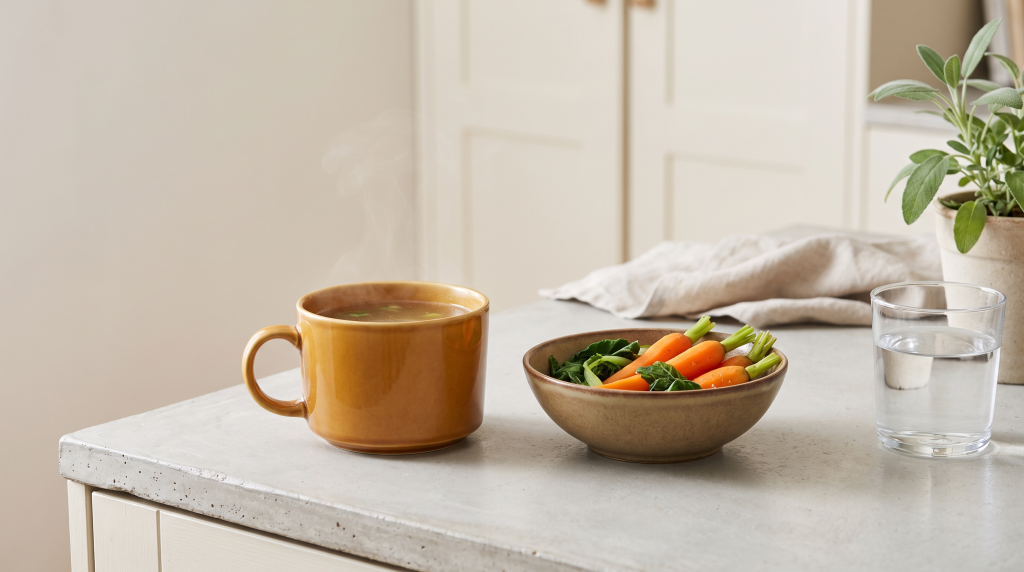
A bone broth cleanse usually means a short period, often one to three days, where you build your intake around bone broth, sometimes alongside gentle whole foods like vegetables, and step back from processed foods, alcohol, sugar, and caffeine. Some versions are broth-only for a day; others pair broth with light meals. The common thread is simplicity: a deliberate pause from rich, heavy, or processed eating, with warm, nourishing broth at the center.
The Idea Behind It
The appeal is partly about giving yourself a reset. After a period of indulgent eating, a few simple days can feel like a way to recalibrate habits, lean into hydration, and return to whole foods. Bone broth fits this role because it is warm, satisfying for its calories, and provides protein and electrolytes, which makes a light couple of days more comfortable than water or juice alone. Think of it as a gentle reset of routine rather than anything dramatic.
Does Bone Broth Actually Detox You?
This is the crucial point to be honest about. Your body already has a sophisticated detoxification system: the liver, kidneys, gut, and skin continuously process and clear what you do not need. No food or drink, bone broth included, is required to detoxify you, and claims that a cleanse flushes out toxins are not supported by good evidence. What a bone broth cleanse can genuinely do is hydrate you, provide gentle nourishment, and help you reset away from processed foods for a few days. That is a reasonable and worthwhile goal, framed accurately, but it is not magic.
Potential Benefits, Realistically
Approached sensibly, a short broth-centered reset may help in modest, practical ways: it encourages hydration, it nudges you back toward whole foods, it offers a simple structure after a chaotic stretch of eating, and many people find the warmth and ritual genuinely soothing. Any of these can be a positive. What it will not do is deliver lasting weight loss on its own, fix underlying habits, or cleanse toxins, and expecting those things sets you up for disappointment. Results vary, and the real value lies in what you carry forward afterward.
Important Cautions
This matters most, so I will be direct. A bone broth cleanse is not appropriate for everyone. You should not attempt one, or should speak with your doctor first, if you are pregnant or breastfeeding, managing diabetes or blood sugar issues, living with a kidney or other medical condition, taking medications affected by food intake, or underweight. Very importantly, anyone with a history of disordered eating should avoid cleanses and restrictive patterns altogether, as they can be harmful; a steady, balanced approach to food is far better. Prolonged very-low-calorie eating is not safe, so a cleanse should be short, and any plan that asks you to severely restrict for an extended time is a red flag.
How to Approach One Sensibly
If a cleanse is appropriate for you, keep it short, gentle, and balanced. Favor a version that includes vegetables and some whole foods rather than broth alone, drink plenty of water, and stop if you feel unwell, dizzy, or unusually fatigued. Listen to your body throughout; discomfort is a signal to eat, not to push on. The goal is to feel nourished and reset, not depleted, and there is no benefit to enduring misery.
Easing In and Out
How you bookend a cleanse matters as much as the cleanse itself. Ease in by reducing processed foods, sugar, and alcohol in the days before, so the change is not a shock. Ease out by reintroducing regular meals gently rather than rushing straight back to heavy eating, which often undoes any sense of benefit. The most valuable outcome is using the reset as a springboard into steadier, whole-food habits, which is where the lasting value lies.
What to Sip During a Cleanse
A cleanse is more pleasant with some variety. Rotate between a lighter chicken bone broth and a richer beef bone broth, season them well, and add fresh herbs, ginger, or a squeeze of lemon to keep things interesting; our guide to how to make bone broth taste better can help. The convenient forms of bone broth make it easy to keep enough on hand, and for related approaches, see how the bone broth diet works and our overview of the bone broth diet.
Is a Bone Broth Cleanse Worth It?
For some people, a short, sensible reset can be a pleasant way to step back from heavy eating and return to whole foods, and bone broth makes those couple of days more comfortable and nourishing than they would otherwise be. For others, especially anyone for whom restriction is risky, it is best skipped entirely in favor of consistent, balanced eating. If you do try one, keep it short, keep it gentle, set realistic expectations, and treat it as a springboard rather than a fix. And when in doubt, a qualified professional is the right person to ask.
What a Cleanse Really Involves
A bone broth cleanse usually means a short period of focusing on broth, often alongside some gentle whole foods, rather than living on broth alone for days on end. It is worth being clear about the language: your body already detoxifies itself through the liver and kidneys, so no food or drink is a literal detox. What a broth focused reset can offer is a simple, warming, lower calorie pause that some people find helps them feel lighter and recenter their habits. It is not a medical cleanse and should not be treated as one.
How to Approach It Sensibly
If you choose to try a broth focused reset, keep it short and gentle. Many people include some vegetables, healthy fats, and other nourishing foods rather than restricting to broth alone, which makes it far more sustainable and balanced. Listen to your body, stay hydrated, and stop if you feel unwell. A reset is meant to feel supportive, not punishing, and a varied mix of chicken bone broth and beef bone broth keeps it more satisfying.
Who Should Skip It
A broth cleanse is not right for everyone. If you are pregnant or breastfeeding, managing a medical condition, taking medication, or have any history of disordered eating, a restrictive reset is not advisable, and you should speak with a qualified healthcare professional before making changes to how you eat. For most people, gentler everyday habits are a better long term path than any short cleanse. Our overview of how the bone broth diet works covers the broader approach.
Frequently Asked Questions
What is a bone broth cleanse?
It is a short reset, often one to three days, that centers your intake on bone broth, sometimes with gentle whole foods, while stepping back from processed food, sugar, and alcohol. It is best seen as a simplicity reset rather than a detox.
Does a bone broth cleanse detox your body?
No food is required to detoxify you; your liver and kidneys do that continuously. A cleanse may support hydration and a reset toward whole foods, but claims that it flushes out toxins are not supported by good evidence.
How long should a bone broth cleanse last?
If it is appropriate for you, keep it short, often just one to three days, and gentle. Prolonged very-low-calorie eating is not safe, so any plan asking for extended severe restriction is a red flag.
Who should not do a bone broth cleanse?
Skip it, or check with a professional first, if you are pregnant or breastfeeding, managing diabetes, kidney, or other conditions, taking certain medications, underweight, or have a history of disordered eating.
Will a bone broth cleanse help me lose weight?
Any change on the scale from a short cleanse is mostly temporary and not lasting fat loss. The real value is resetting toward whole-food habits, and sustainable weight management comes from consistent eating over time. Results vary.
Does a bone broth cleanse detox your body?
Your body detoxifies itself through the liver and kidneys, so no food or drink does that for you. A broth focused reset is simply a gentle, lower calorie pause some people find helpful, not a medical detox.
